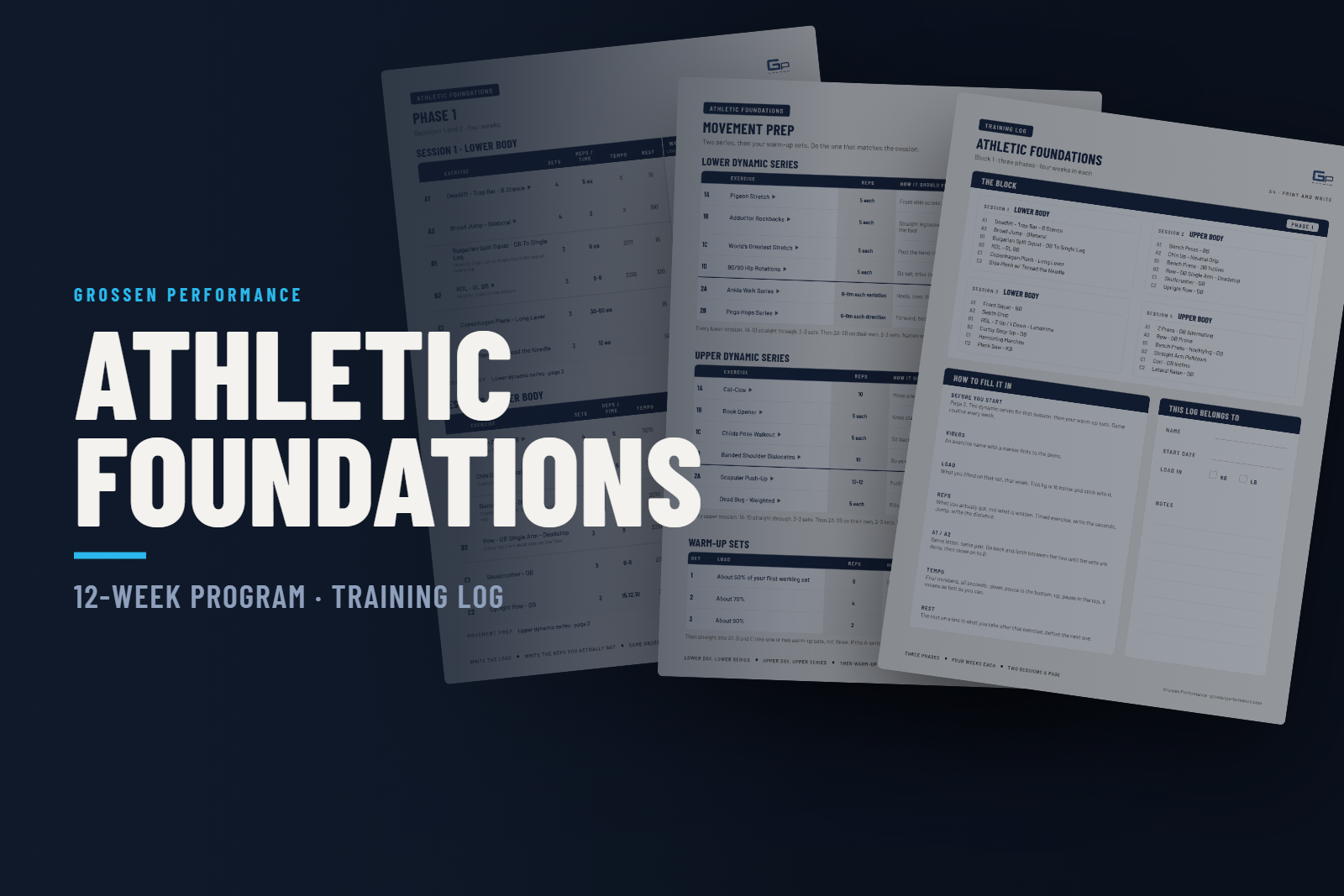
The 12-week Athletic Foundations Program, free with the course. Twelve weeks, three phases, four sessions a week.
23Hrs
59Min
58Sec
Built To Push · strength, but make it athletic

Understand exactlyhow to build forcethat arrives in time.

Almost everyone under a barbell can tell you what they lift. Far fewer can tell you whether any of it turns up in time to matter. This is the course that closes that gap.

See what it covers

Ten videos. You will be able to explain every choice you make, including the ones you decide not to make.

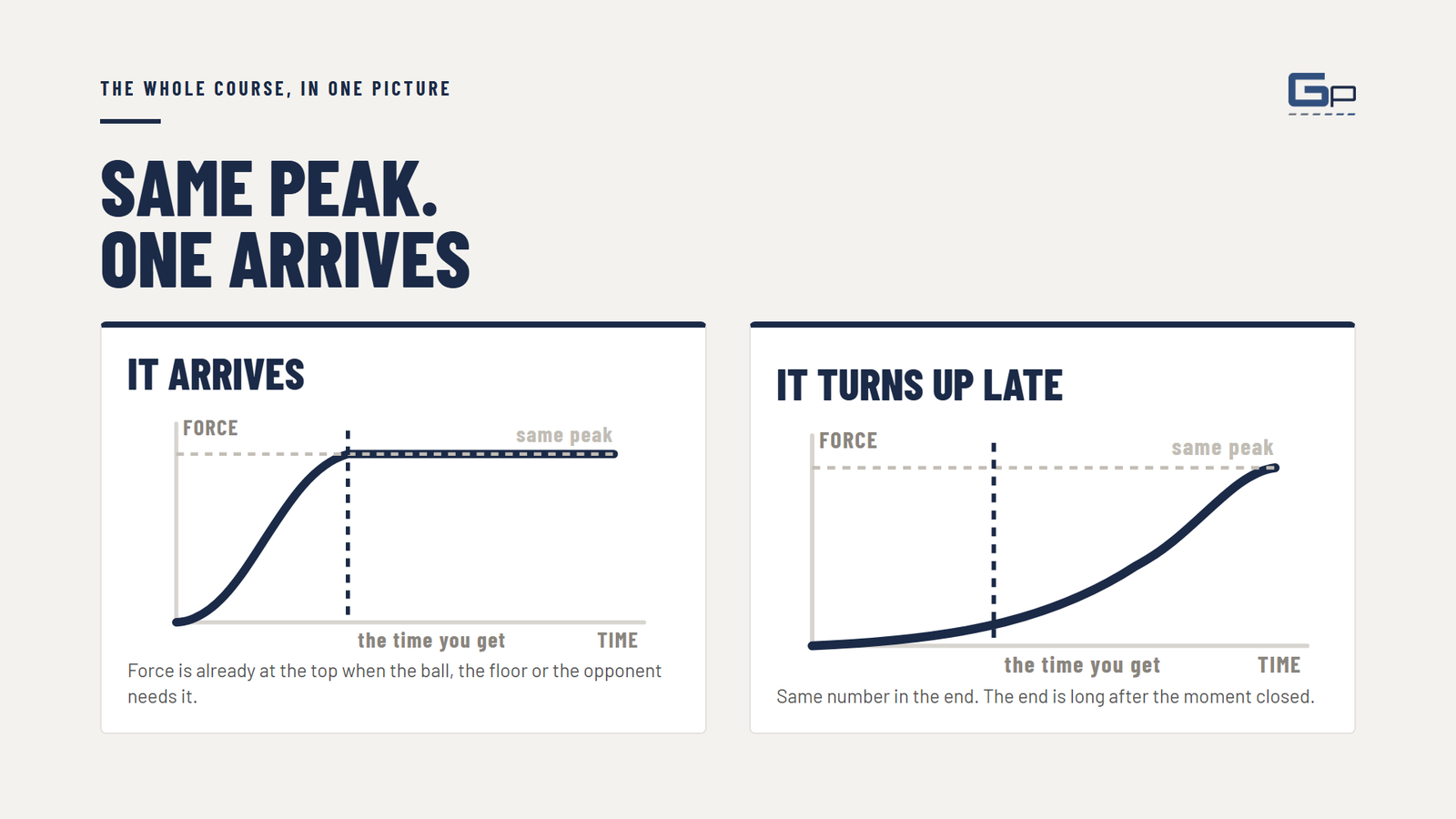
The whole course, in one picture
Same peak force. Only one of them arrives in time.

Lesson one is free, in full, so you find that out without spending anything.

Sound familiar

You have got stronger, but you haven't got faster.

Tick the ones that are you.

You can't say what your squat is actually training.Or what a trap bar pull does that a back squat does not.

Nobody told you how heavy, or how many. So you added a set, and then another one, and called it progress.

You have been told to lift heavy, and to lift fast.Both by people who sounded certain.

You don't know which of your lifts is behind.And nobody has given you a way to find out.

You were handed exercises without reasoning, so every decision after that was a guess.
Why nothing you have watched fixed it

There are thousands of lifting programs online, but almost none of them tell you how much.

Top five lifts
A list is not an education. Five exercises, no way of knowing which are yours.
Definitions
Knowing what eccentric means does not tell you what to do. Not which lift, not how heavy, not when.
Follow along programs
You get trained, not taught. Twelve weeks of sets, and no reason given for any of them.
Just lift heavy
Advice that doesn't always make sense. Nobody says which position, how heavy, how many, or when to stop.

This course teaches the reasoning first.

What you will understand by the end

Exactly what, how much & when.

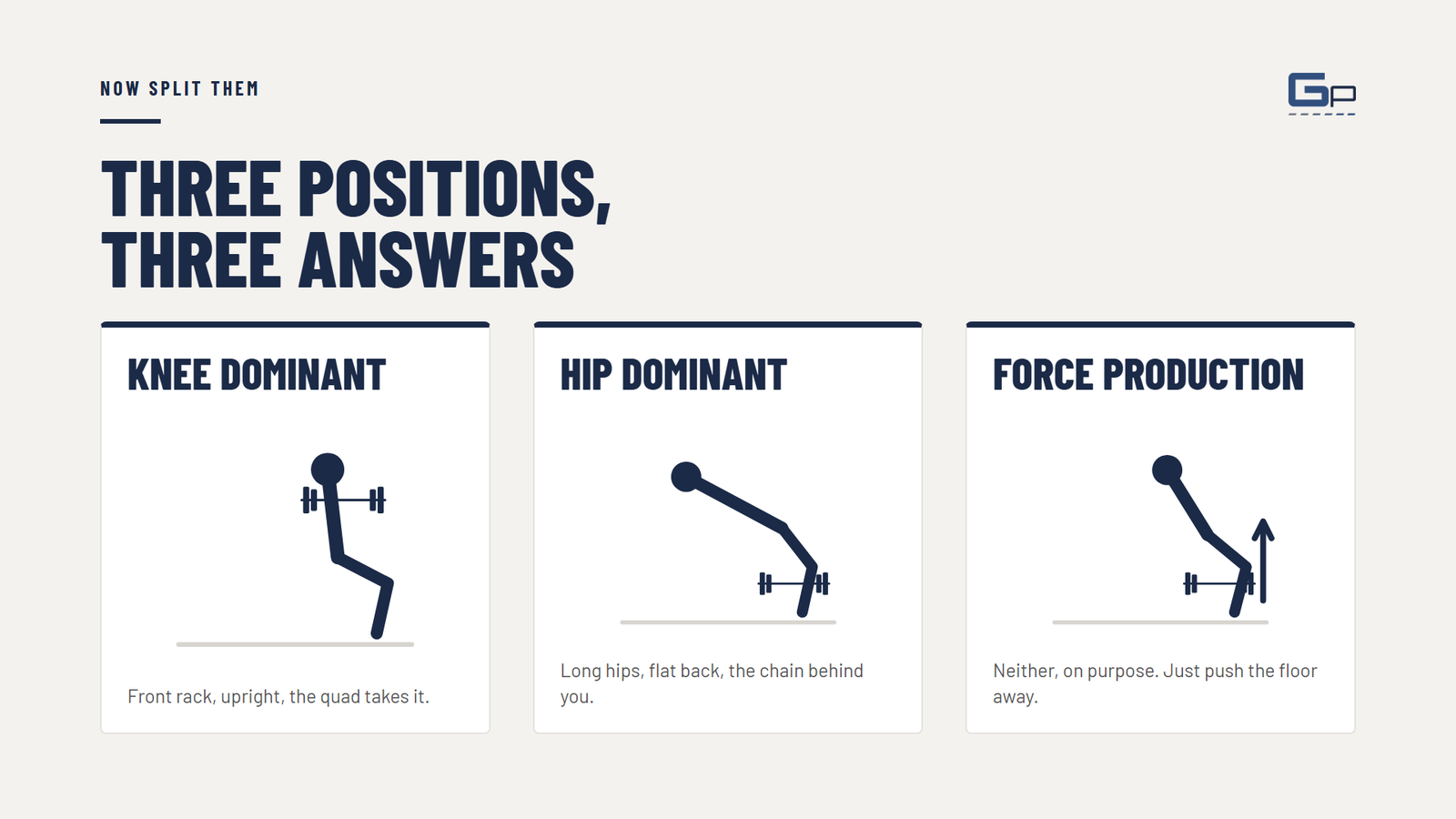
Course slide: three positions, three answers
Why

What each lift is actually for

Two lifts, three positions. Train the one that is behind instead of the one you already like.

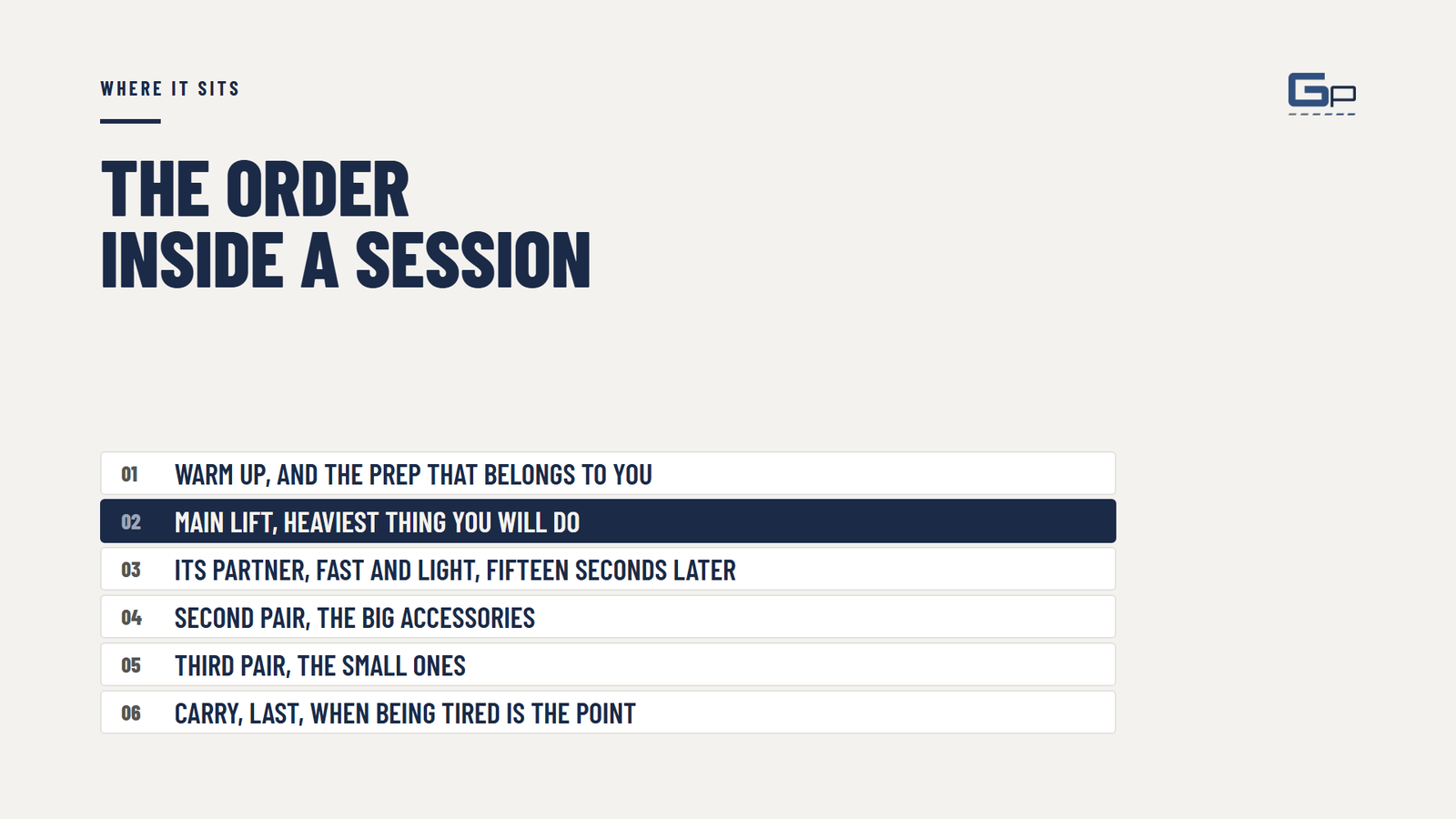
Course slide: the order inside a session
When

Where it goes, and when to stop

Fast work at the top of the session, heavy after it. The set ends when the speed goes.

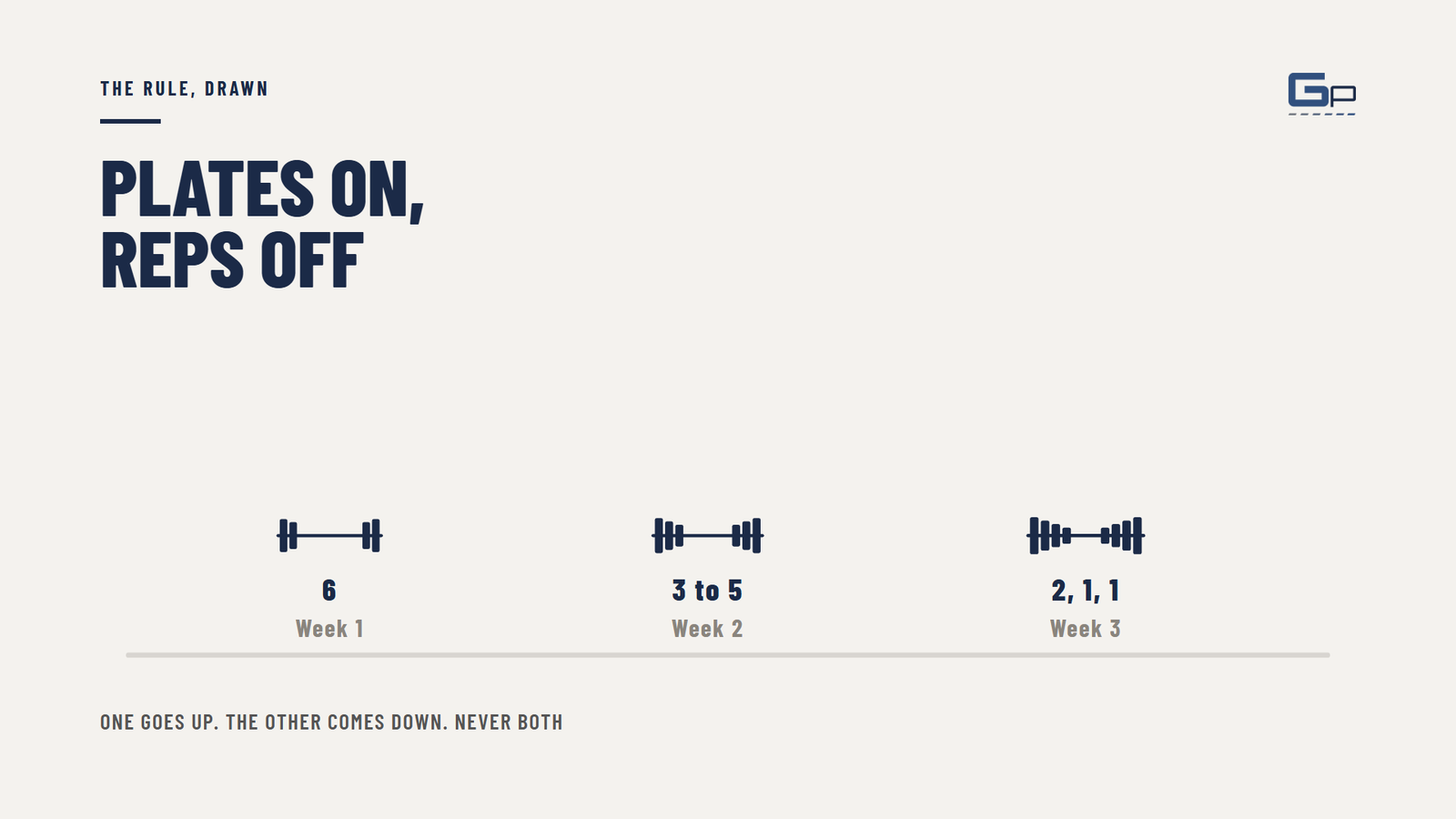
Course slide: plates on, reps off
How

What makes a lift harder

The dose, and the one thing that moves each week.

Learn those three, and you can look at any lift and say what it is for, who it suits, and where it belongs.
The syllabus

Ten videos, building on top of each other.

The position that is behind is the one your next block leads with.

The lifts and the links
01
What athletic strength isWhy a big gym number and a slow athlete sit together so often.
02
Lower body: the lifts and the positionsSquat and hinge, then the three positions inside them.
03
Upper body: pressing and pullingFour directions, and what the upper body is for in a sport played with the legs.
04
Unilateral: one side at a timeSplit stance, single leg, and which hand the weight goes in.
05
The trunk under loadThe link that decides how much of it reaches the bar.
How strength is built
06
Eccentric and isometric
07
Concentric: producing it in time
08
How heavy, how many, how it goes up
The three jobs inside every rep, then the dose that turns them into a block you can actually write down.
Strength that transfers
09
Loaded power: moving weight fastCleans, push press, jump squats and throws. Where the whole course gets cashed.
10
Methods: faster, then on the dayCluster sets, contrast, and priming, which builds nothing and still changes the day.
The bar stays in your hands the whole way through. The moment you leave the floor, that is Built To Bounce.

Stop guessing how much to lift.

Ten videos that teach you the reasoning, then show you what it looks like written into a real block.

What happens when you buy

Three steps, and you are watching straight away.

Step one

You pay and you are in

Instant access in the GP app.
Step two

You watch the five that teach the lifts

The lifts, the positions and the link that carries them.
Step three

You watch it applied

The rep, the dose, the methods and a real block.

Yours for good. No subscription, no expiry.

Be honest with yourself

This is not for everyone, and I would rather you worked that out now.

Buy it if
  • You want to understand strength well enough to make your own calls
  • You already lift and you want every set to have a reason behind it
  • You coach other people and you are tired of prescribing sets you cannot fully defend
  • You want to know what to do on the week it stops going up
Skip it if
  • You want somebody to test you and write your training. That is coaching, and this is not it
  • You want a follow along program and would rather not know why anything is in it
  • You are currently injured and looking for rehab. This is training, not treatment
  • You want a number promised to you. Nothing here measures you, so nothing here can promise that
Coach Dries
Why Dries

I trained to get strong and big, and it left me tight, heavy, and slow.


For years, I chased a lean, muscular physique and the big three. The numbers went up, and so did everything I didn't want. I got even tighter. I felt heavy and slow. And eating for that size pushed my gut health further in the wrong direction. I was "strong," and I'd never felt less athletic.

In early 2025, I got the opportunity to prep athletes for the NFL Combine, which showed me what real athletic training looks like and put my weak links right in front of me. I'd built one quality, big-three strength, and ignored the rest. So that's what I changed: strength isn't just the big three, it's athletic, it's unilateral, and the big three.

But here's where it really matters. I took everything and applied it to myself and my clients. I'm not stronger on the big three than I was. But I'm faster, more explosive, more mobile, and more athletic than I've ever been, and my gut is in a much better place. And the results my clients achieved. Issues that I couldn't seem to figure out suddenly all made sense.

That's the GP Method: I find the weak link holding you back, whatever it turns out to be, and point your training straight at it.
MSc Strength & Conditioning @ ALTIS (in progress) EXOS Performance Specialist Pre-Script Level 3 Mentorships across North America & Europe Nutrition and health coaching credentials
Proof

This is what one lesson looks like.

Every lesson is built the same way. These four frames are lesson one and lesson two, so you can see the shape before you buy.

Course slide: same peak, one arrives
One
The idea, drawn. Same peak force, and only one of them arrives in time.
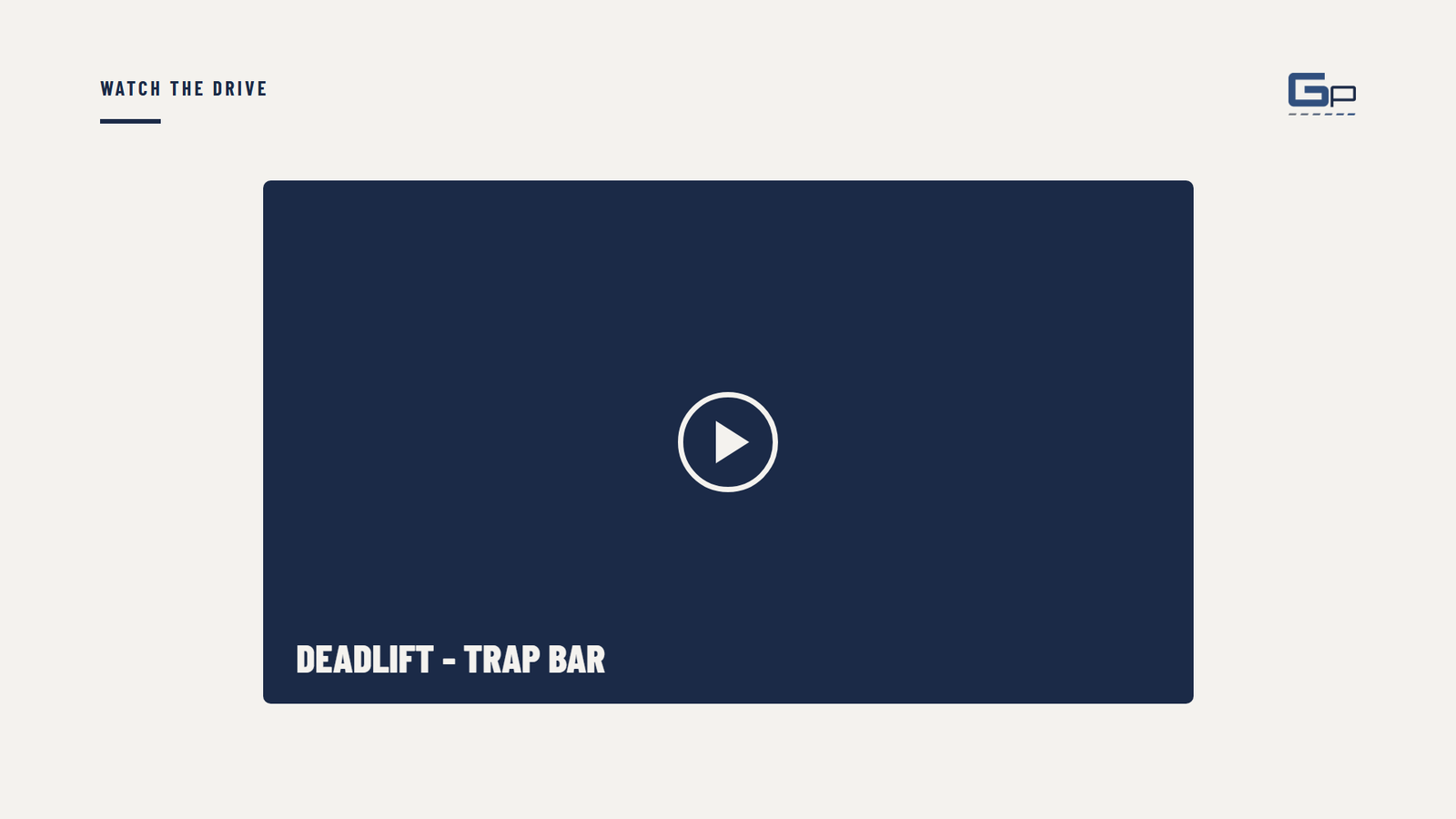
Course slide: a filmed trap bar deadlift demonstration
Two
A filmed demo of the lift, playing inside the lesson or attached in the library.
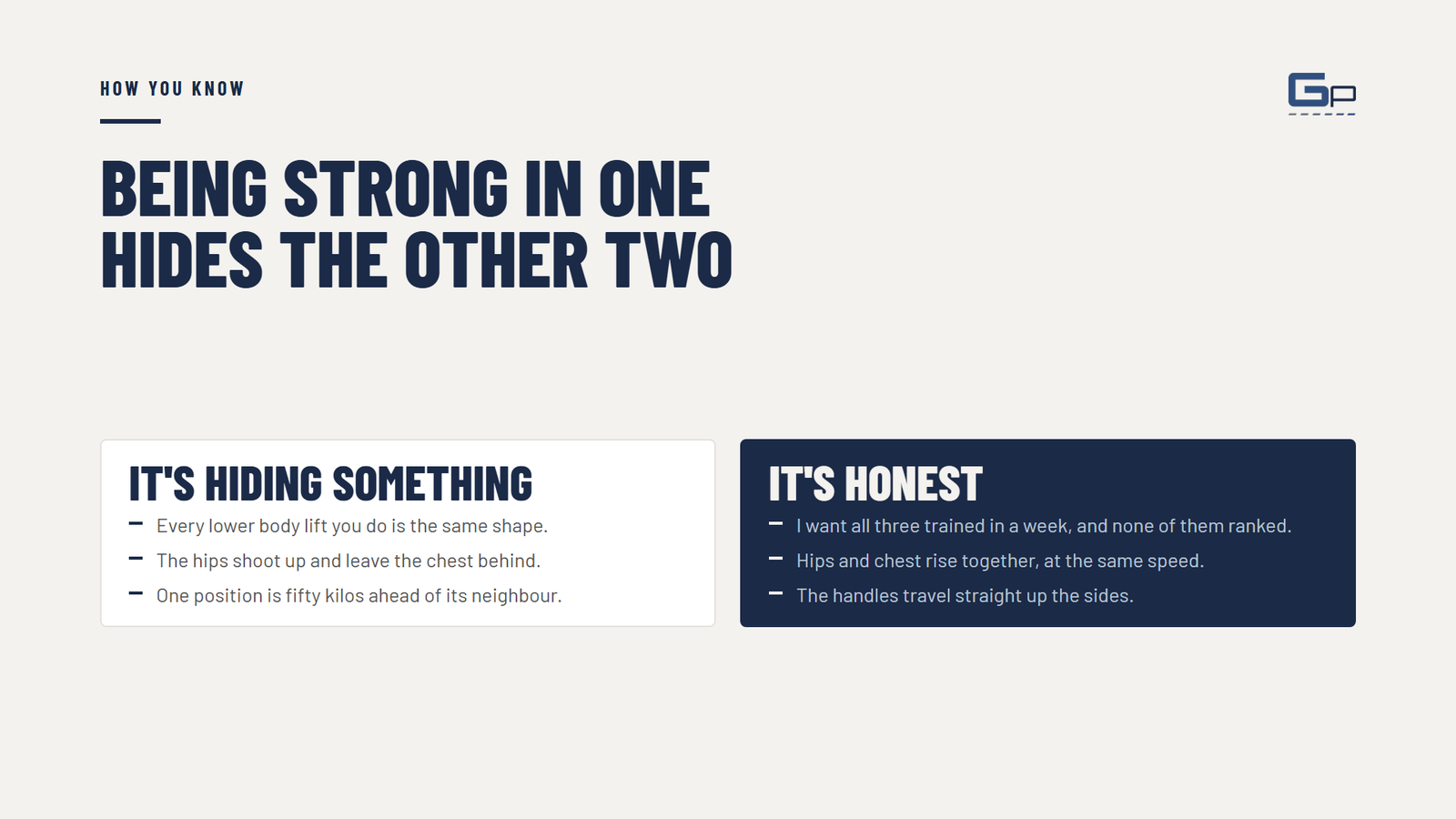
Course slide: how you know you are failing it
Three
The check, passing and failing side by side.
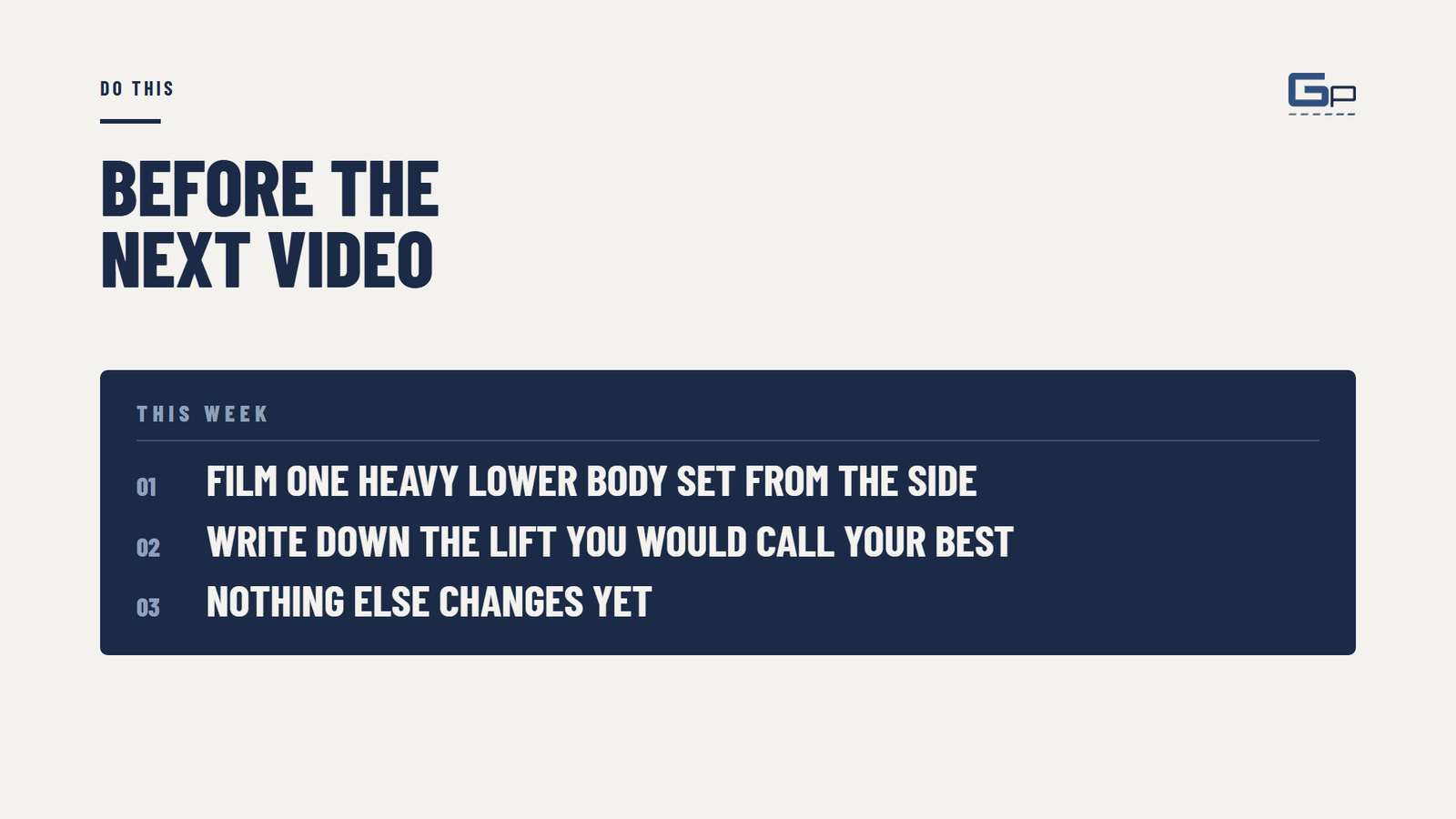
Course slide: do this before the next video
Four
What to do before the next video.

See the full syllabus ↑

Price

One price. Yours for good.

Built To Push: Strength, But Make It Athletic
€47
27
one payment · yours for good
  • Ten videos, kept for life, no subscription
  • The reasoning: which position, how heavy, how many, and when to stop
  • Upper body and lower body, which none of the other courses do
  • A real block, week by week, with the rest times written down
Included today
12-week Athletic Foundations Program
€47
Free
  • Three phases of four, four sessions a week
  • Movement prep and warm-up sets before every session
  • Sets, reps, tempo and rest, with a demo video on every lift
  • Eight A4 pages, print it and write your load on it
Get the course

Instant access. Yours to keep.

Questions

Answered straight.

I have never lifted with a barbell. Am I too early for this?
No, this is the right place to start. Lesson two begins at the two lifts everything else is built on, and every lesson gives you the standard before it gives you the dose. If you cannot hold the position yet, the course tells you that is the thing to fix first.
I coach other people. Is this useful to me?
Yes, and probably more than it is to a beginner. The course is the decision-making, not the exercise list: what each position is for, what moves from week to week, what tells you a set is over, and what to do when the bar stops going up. You can use that on anyone in front of you.
Is this a training program?
It is a course. The block inside it is the worked example, so you can see the reasoning followed all the way through instead of left as theory. You can run it, and plenty of people will, but what you are buying is the understanding.
What equipment do I need?
A barbell and plates, a rack, a bench and a pair of dumbbells. A trap bar earns its place if you have one, and nothing in the course needs one.
Will this make me stronger?
Yes, and more to the point it will teach you what you are doing and why, which is the part that has been missing. Nothing here measures you, so I am not going to promise you a number.
Is this the same as Built To Bounce?
No, and they do not overlap. Anything with a bar in your hands is this course. The moment you leave the ground, that is Built To Bounce. Lesson nine is as close as this one gets, and the bar never leaves your hands in it.
Do I need to be an athlete?
No. If you lift and you want the strength to show up somewhere other than the gym, the course is for you. Nothing in it assumes a sport.

Know why you are doing it, or stop doing it.

Ten videos, the reasoning behind every choice, and one real block written out at the end of it.

Coach Dries · Grossen Performance
€47 €27Built To Push, yours for good